

Yes. I would. (Part Three)

This is final part in a three-part series. If you haven’t already, you should read Part One and Part Two first.
The smell of mildew clung to my clothes and the inside of my nose all the way through lunch. Luckily, by afternoon, the sun had come out, both the temperature and the humidity climbing, so I ditched my smelly hoodie for the tour of Ford.
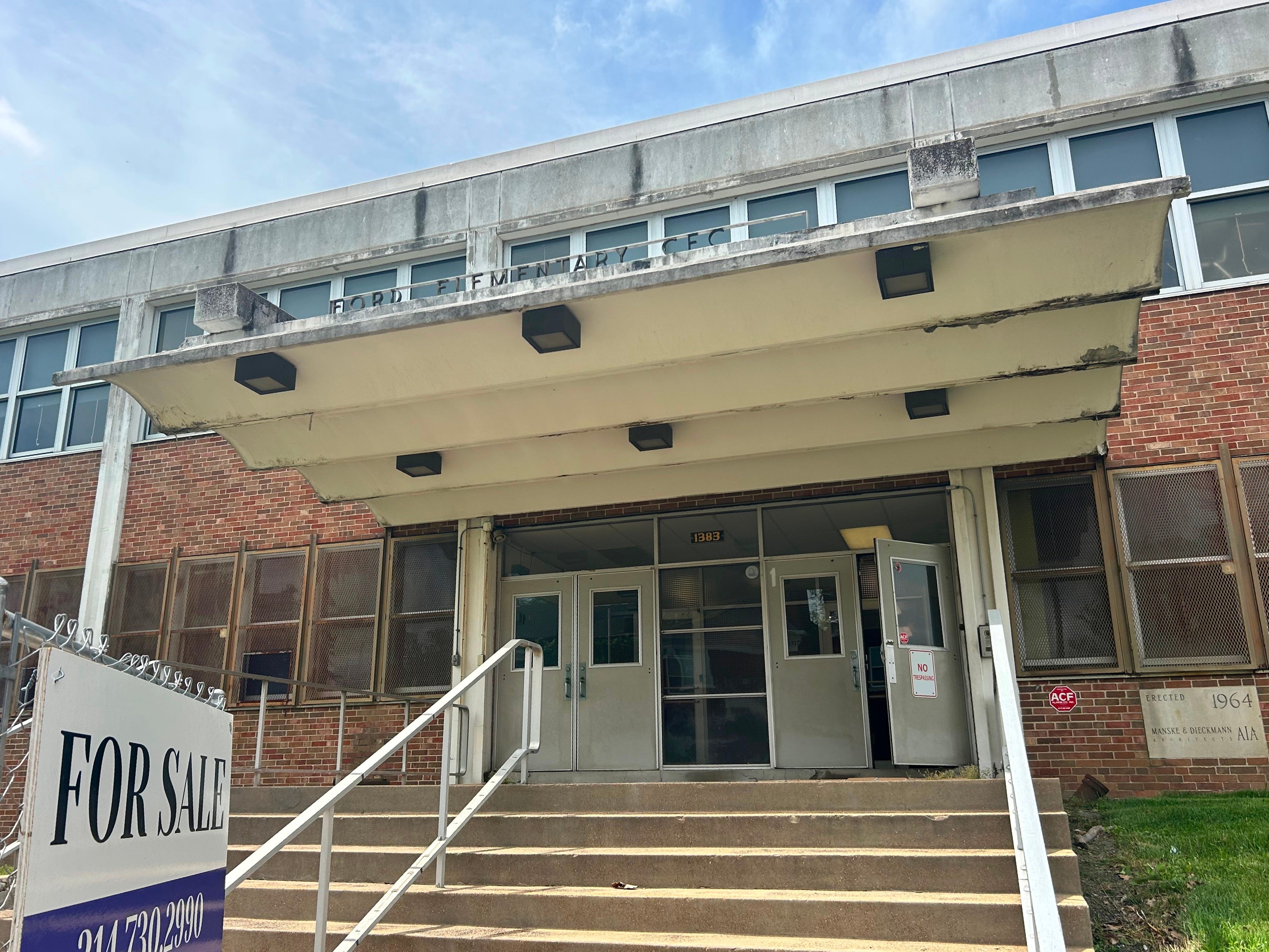
Ford School opened for the 1964-65 school year. Built at a cost of about $1.5 million and funded by taxpayer bonds, it now is listed for sale for $788,200. Along with Ford, the 1961 bond paid for the construction of Cook, Langston, Mitchell, Stevens, and Williams. Today, Stevens only remains operational as a school and that’s only because it reopened for Sumner students after the tornado. These schools were the first to be designed by private architects rather than ones employed by SLPS. At the time, William Ittner (who held the contract for Langston), said that the change would allow “new and fresh ideas to invigorate the school system’s stereotyped”1 school designs.
Ford School is one of a couple SLPS schools with a portion of the building elevated on stilts. At Ford, that choice was made to accommodate the 20 ft slope in the land. The covered portion of the lot was paved to create a sheltered play area so that children could spent time outside regardless of weather. However, that was not the only detail to receive special attention. It was said that the design by architecture firm Manske & Dieckmann allowed sunlight to shine into classrooms over the left shoulder of students and that students would enter the classroom at the front so that the teacher could supervise them entering and exiting.2
At the Ford School dedication, school board member and pastor Rev. Dr. Amos Ryce, gave an address called “What is a School?” which “brought into focus that a school is not created by brick and mortar, but by the molding together of a concerned community, a concerned faculty, and interested parents.”3
Ford School has had a lot of grade configurations over the years. It was originally K-8 but in the 1980s, it converted to a middle school when desegregation attempts created clusters of elementary schools each served by a middle school. That effort was short lived, and by the early 1990s it returned to an elementary school, just with much lower enrollment this time.
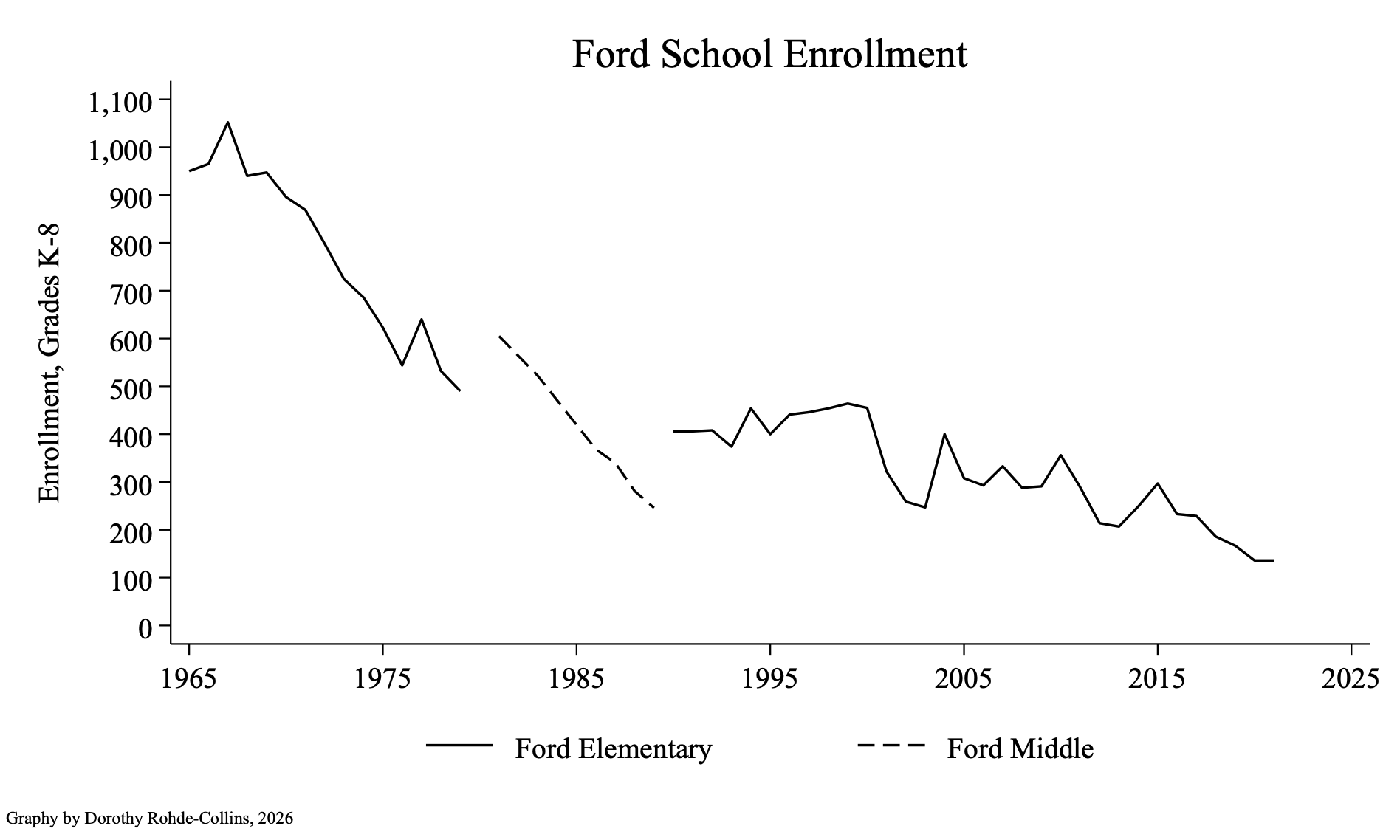
The easy parking right outside the building’s front door made it obvious that this open house would not be well attended either. I stayed in my car for a few minutes before going into the school, thinking about the pre-closure tours of 2021, remembering how the principal claimed a super high percentage of the houses around the school’s perimeter were vacant. It didn’t seem like much had changed.
I eventually did get out of my car, walked around a little bit, took some pictures of the outside of the school. The first thing I noticed was this:
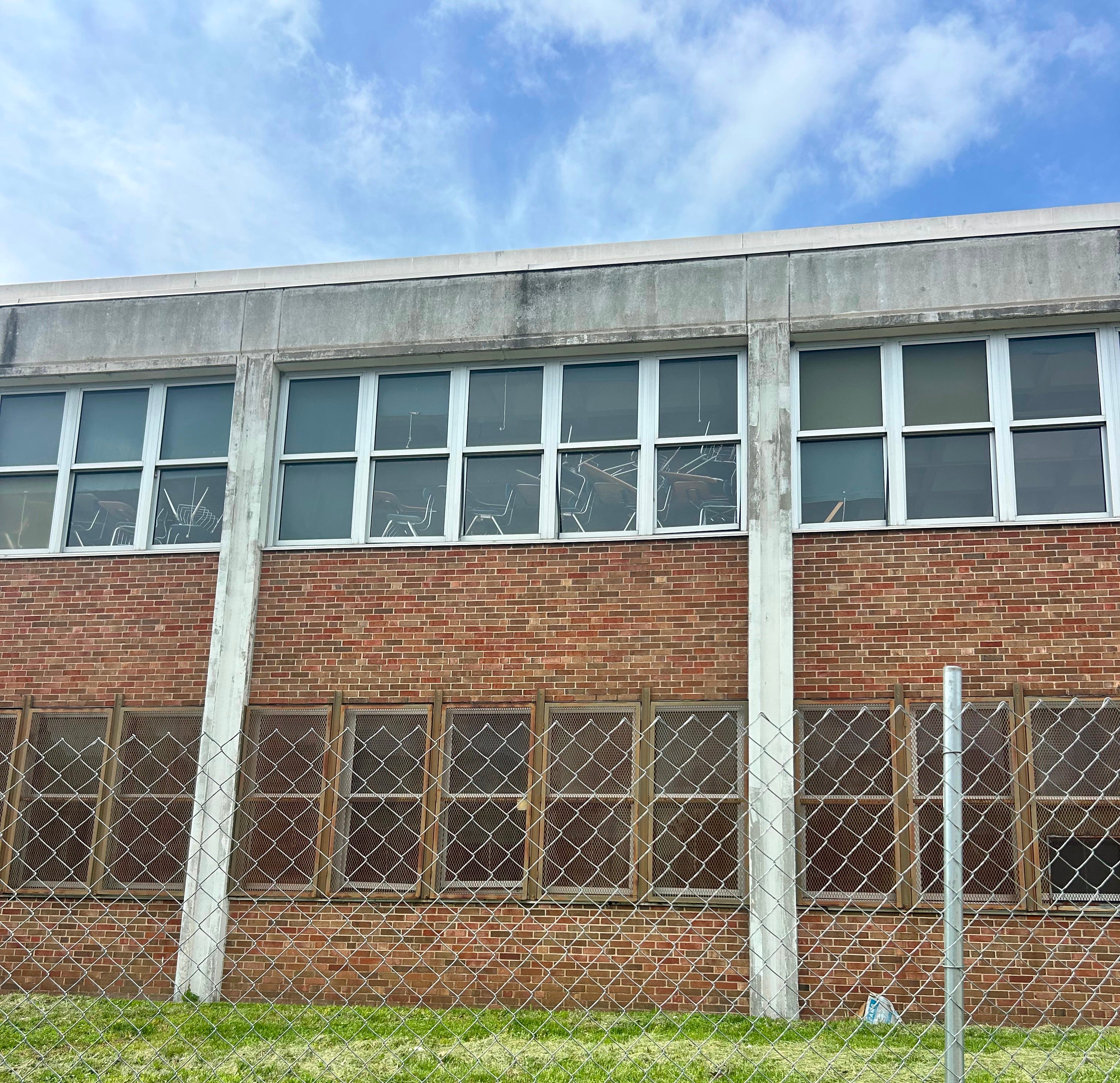
Dozens of chairs stacked up in the windows, legs disturbingly askew, each a skeleton or a carcass, each a reminder that this building was once a school, all those seats once filled by students.
With the memory of Farragut only a few hours old, I was prepared for anything as I walked through the front door. But the experience at Ford was so, so different.
There are lots of pictures today which means your email provider may limit how much of this newsletter gets delivered to your inbox. If you get the “View entire message” alert, please click through so you don’t miss anything!
All of the photos included in today’s newsletter were taken by me during the open houses but there’s also an entire gallery of photos taken by St. Louis Post-Dispatch photojournalists. No excuses about the firewall, either. Subscribe if you can but, if you can’t, you can access our daily newspaper (and many other media outlets) for free through the St. Louis Public Library with your library card.
While I ask that you do not duplicate, download, screenshot, or republish these photos, please do feel free to share this post in its entirety.
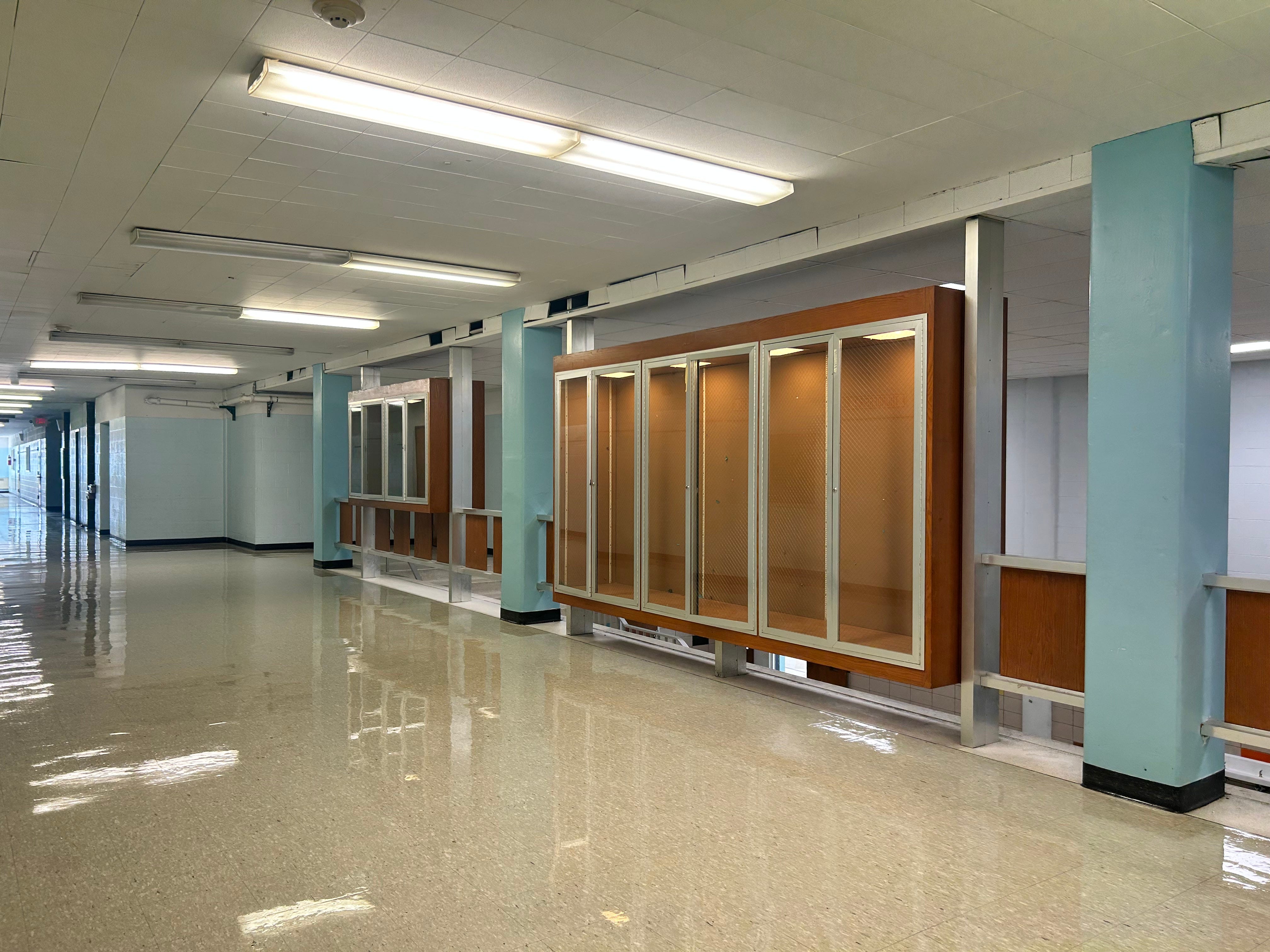
The difference was immediately obvious. I’m sure you can see it, too.
At Ford, the electricity was on, the ceiling was where it should be, and the floors gleamed with that newly polished mid-August welcome-back-to-school shine. Only it was April. No students were coming. And they hadn’t in quite a while.
If a school could sit vacant for five years and still look this pristine, then why did we ever close it in the first place?
If students could walk into bright, safe, clean, classrooms right now, today, then why didn’t they?
How could the conditions of Ford and Farragut be so different? No reasonable person would ever believe these two schools closed on the same day with the same vote and the same power holders (of which I was one) behind the dais.
“Knowing what you know now, seeing what it looks like today, would you still close the school?”
At Farragut, I was sure of my answer.
Yes. I would.
Ford made me wonder if I had it all wrong.
But this time, nobody asked. I didn’t even ask myself.
Remember Farragut, where puddles of standing water reflected back windows and sky?
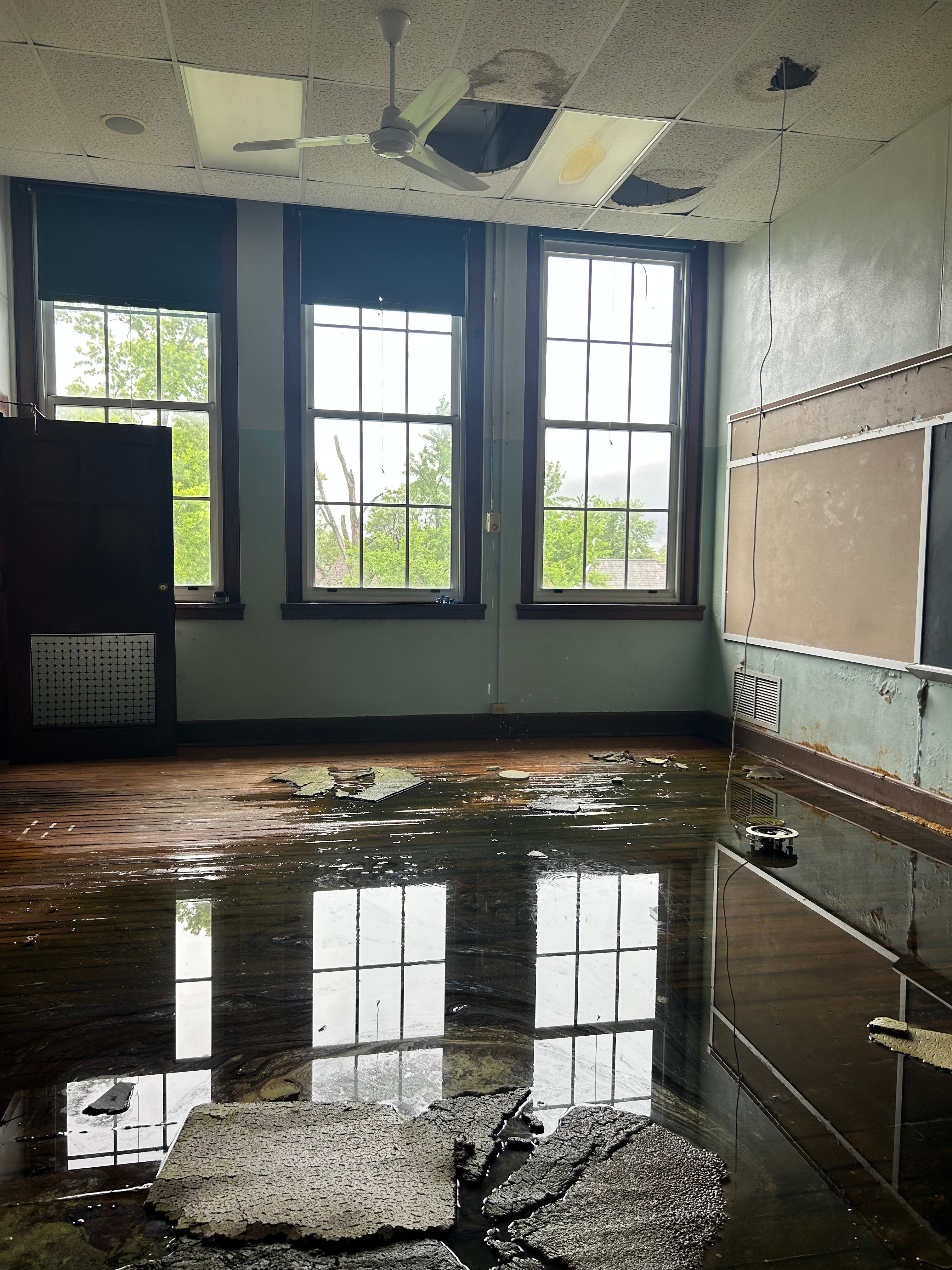
At Ford, light shone off the floors too, except here it wasn’t water doing the reflecting. It was sparkling, seemingly freshly polished linoleum. There were no students to test the architects’ claims that natural light would fall over students’ left shoulders, but plenty poured into classrooms.
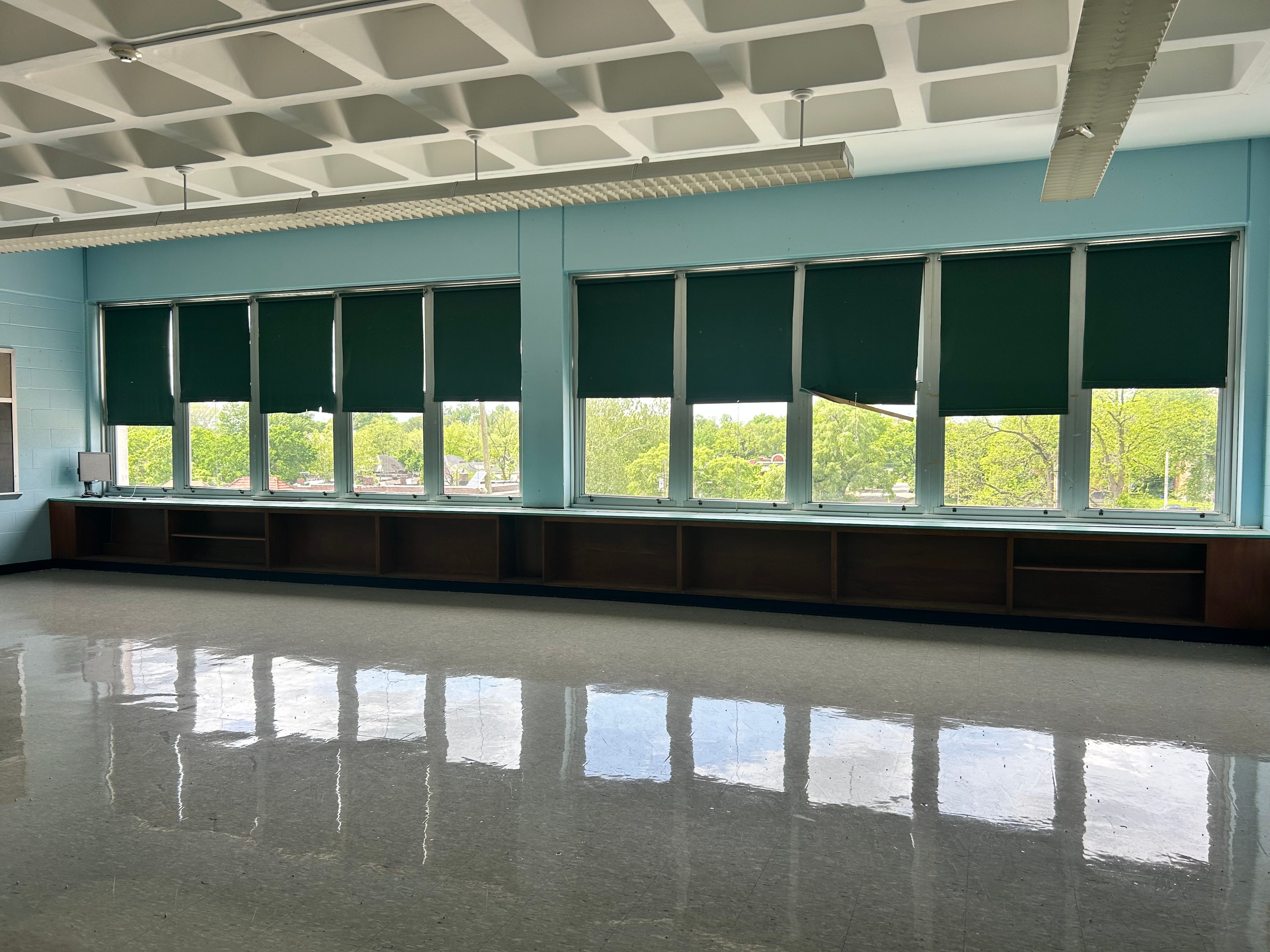
As any SLPS teacher or principal knows, those green window shades are ubiquitous in the district. They’re heavier than they look and take more force to pull down than might be expected, unraveling off the rod and rolling down the window with a distinct snap. The green material is rough and crumbly along the edges. It’s not uncommon for it to break off, leaving shards of shade behind.
Here is a good time to tell you that classrooms in Ford remind me so much of my old classroom at Northwest, a school that was also built during the 1960s. I had an absolutely enormous south-facing classroom lit and warmed beautifully by the sun. While he gets most of the attention, Ittner did not design the only beautiful and thoughtful spaces in SLPS.
So, my time at Ford was spent not just processing my time as a school board member, as the monster who closed schools and removed all the people who instinct suggests should be in all those rooms, but also as a former teacher.
How many SLPS lives have I led?
How many could I process at once?
Even though the conditions of the two schools could not have been more different, there was at least one similarity between the two schools.
Piles of abandoned computers, too many to count. Keyboards, monitors, headphones, printers, left on classroom floors and shoved into boxes. Some were tagged with stickers indicating they were paid for with federal grant money, a reminder that these particular school closures coincided with the madness that was creating virtual schools amid a global pandemic.
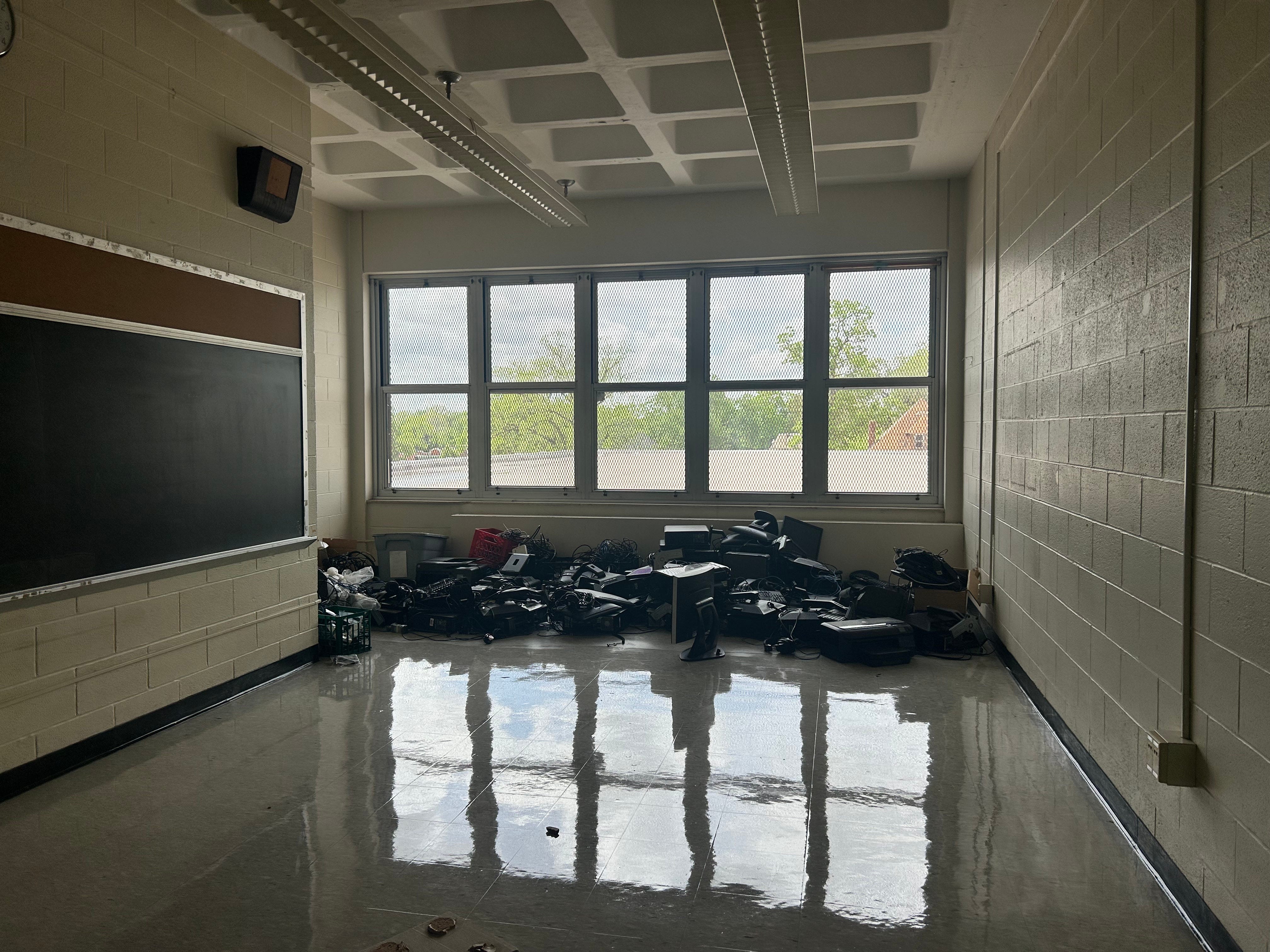
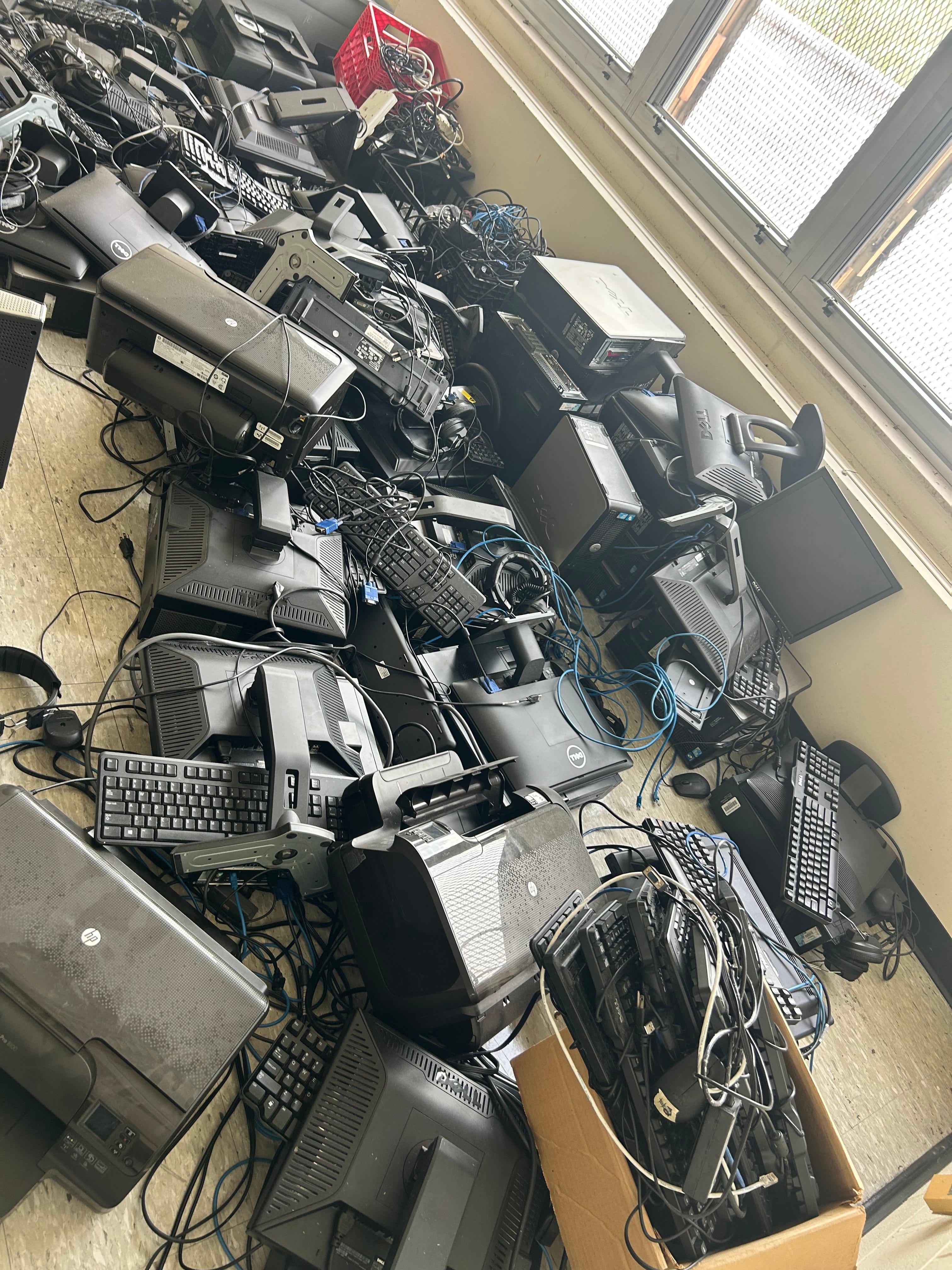
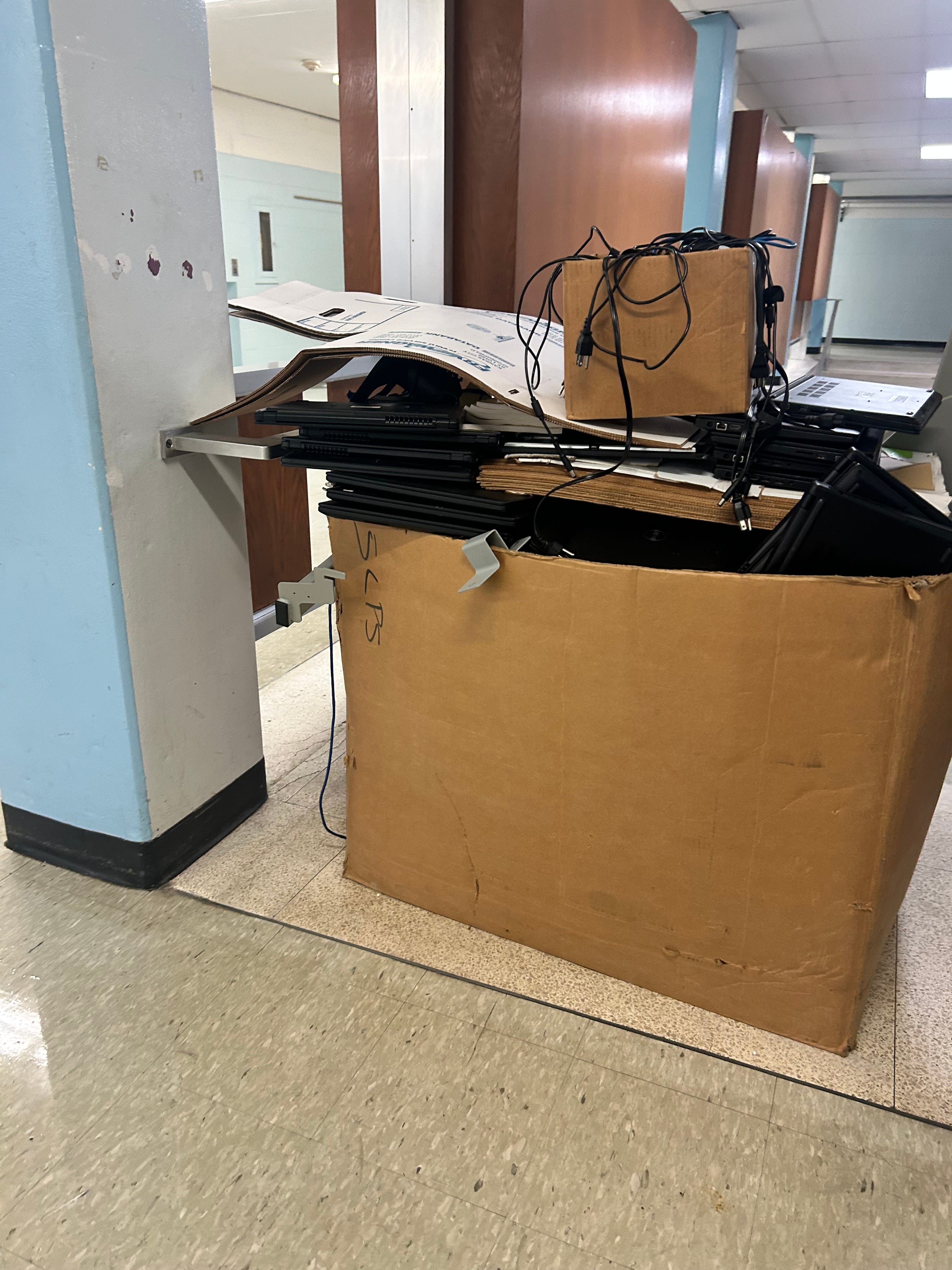
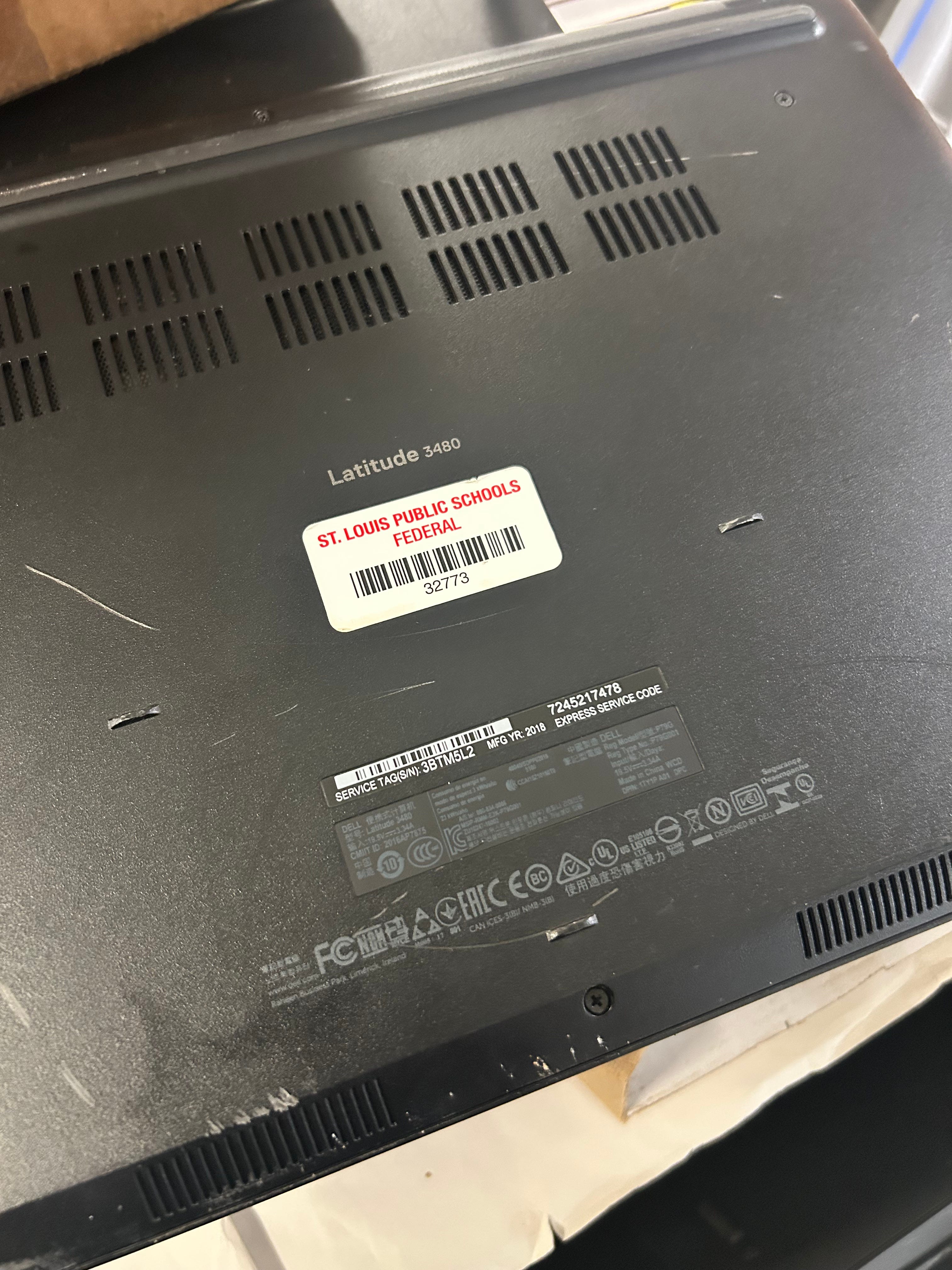
I don’t know how to sum all this up nicely. I’m not even sure what to say next. Maybe that’s because I left Ford more confused than I was when I arrived. A school that looked that well-kept deserved to have students sitting in desks, learning in classrooms, and running through hallways. A school that well-kept deserved to be alive.
But this is St. Louis, a city that can’t keep its people.
And this is SLPS, a district that can’t escape the trap of its past.
However, St. Louis is a city that persists and SLPS is a school district that does too.
In the weeks that have passed, I’ve come to see these schools as representing either end of a school closure continuum I didn’t know existed, neither end ideal.
Farragut, a doomsday scenario, a zombie movie set, a glimpse of how quickly nature reclaims the world once humans are gone. Farragut, vacant, heavy with what was.
Ford, a time capsule, a museum, a textbook definition of a school. Ford, vacant, heavy with what can be or maybe even what still should be.
Any hope we have for SLPS is caught in that in-between, in-between regret and acceptance, the unsaid and the said, the history and today.
I’ve spent a lot of time questioning my decision, wondering if I did the right thing, reflecting on the outcomes. In the end, my answer stayed the same.
“Knowing what you know now, seeing what it looks like today, would you still close the school?”
Yes. I would.
In a span of four days, I defended my dissertation on school closure and walked back through two schools I closed. By the end of that week, I knew, without a doubt, that I am an expert in school closure.
It feels weird to start a sentence with “I am an expert in…” It feels even weirder to end that sentence with a depressing phrase like “… school closure.” Who would ever do that on purpose? Well, not me.
But, as is so often true in life, there were stronger forces at play. Sometimes the universe gives you exactly what you need at the exact right time. This was one of those times.
Somehow, one night in January 2021 sent me on an odyssey. One that began in the present, traveled all the way back through 75 years of history, and returned to a present now, somehow, six years in the future.
In the beginning there was no way I could have known this would become my whole future. One decision reshaping who I am, one thing leading to another.
All of this chose me, an invitation that bypassed the brain and went straight to the soul. I consented to the partnership, but I didn’t know what it was or what it would be, how much it would change me, change how I see myself and the world. In all the everything, I lost my way more than once. Every time I tried to push it away, hide in a cave, try to avoid it, it waited patiently, not taking my hesitance as a no, waited for me to come back around to where I belong.
Knowing everything I know now, the good and the bad; the ups and the downs; the sleepless nights and antsy days; the times I tried to quit and the times I couldn’t quit going forward, would I do it all again?
Yes. I would.
Quoted in the St. Louis Post-Dispatch, August 23, 1964, A11, story by Manuel Chait
St. Louis Post-Dispatch, August 23, 1964, A11, story by Manuel Chait
The St. Louis Argus, November 27, 1964, p. 12